Joy-OS
AI PRODUCT & PERSONAL OPERATING SYSTEM
Concept / AI Product / Product Design / Creative Direction / AI Direction
Product Design / Creative Direction / Art Direction / UX / Prototyping / Production Oversight
I built JoyOS because my day was being decided by whatever shouted loudest.
I have ADHD, and I am exploring a formal autism diagnosis. The hard part was not the work itself. It was starting, choosing, remembering, and not drowning in a list that made everything feel urgent. Most productivity apps made that worse. Infinite lists. Red badges. Guilt dressed up as efficiency.
So I built the opposite. A calm operating system for my own life. Three things a day. Nothing that shames me. Nothing that fails. If something does not get done, it waits quietly or reschedules. The word "snooze" does not exist anywhere in the product.
I have always been able to see the technical part of my creative work. I just could not build it. AI changed that. JoyOS is what happened when I directed a set of AI tools the way I direct a production team: Gemini for deep research, GPT to pressure-test my thinking, Pinterest for visual direction, and Claude Code to build.
The vision and the execution sat in the same hands, for the first time.
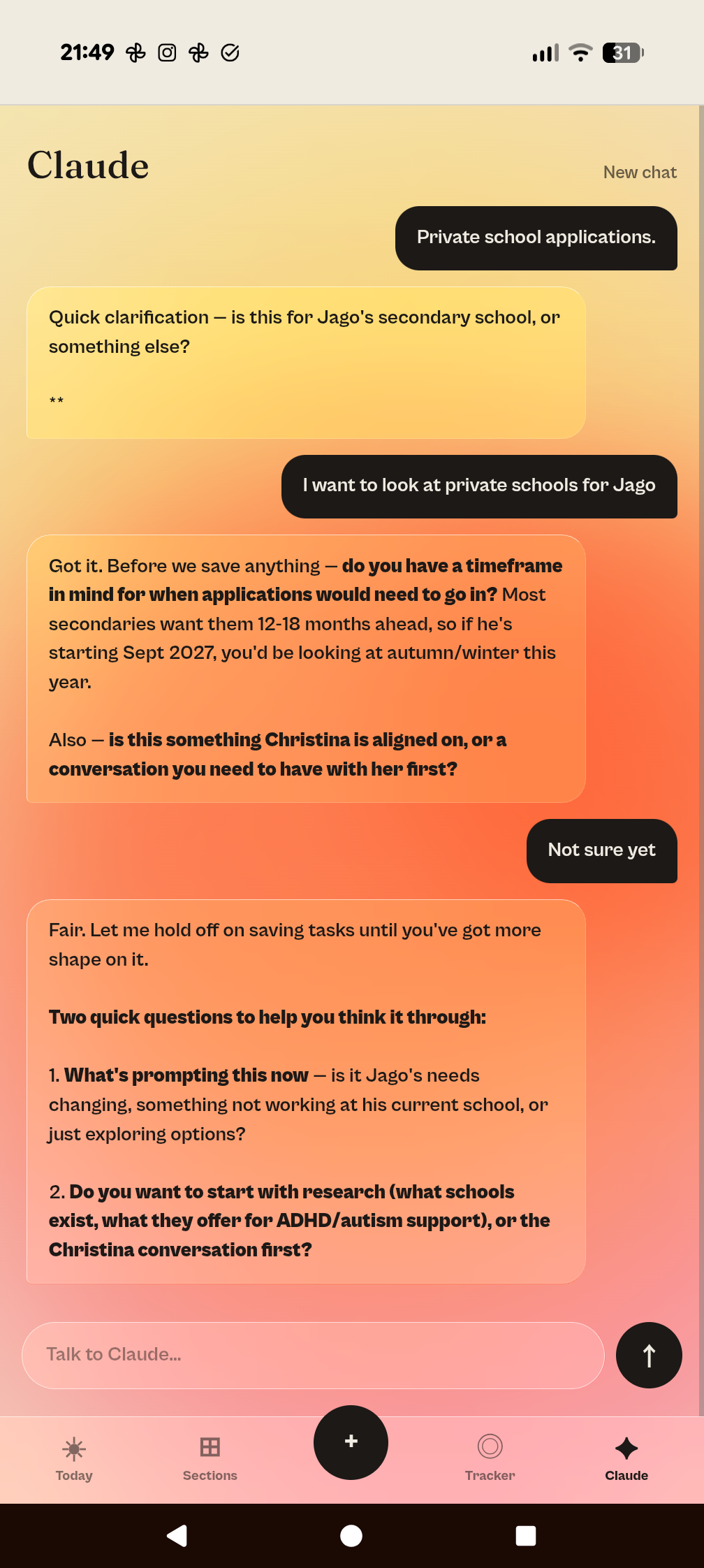
I designed the whole thing: the philosophy, the screens, the rules, the tone of voice, and the way Claude talks to me inside the app. I directed the build rather than writing the code by hand. The repo shows 81 commits across 19 working sessions on 10 days, built around client work and co-parenting between May and July 2026.
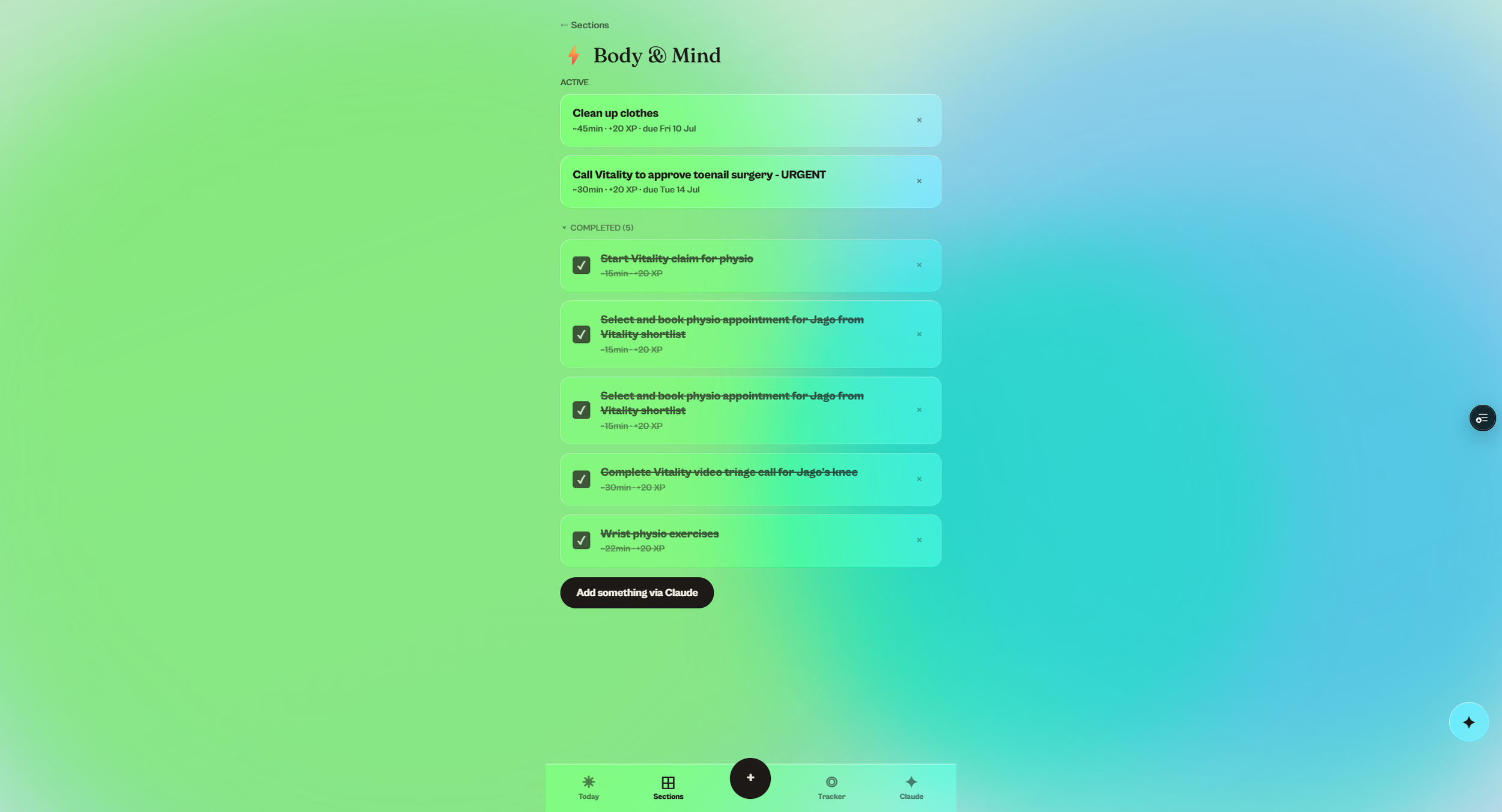
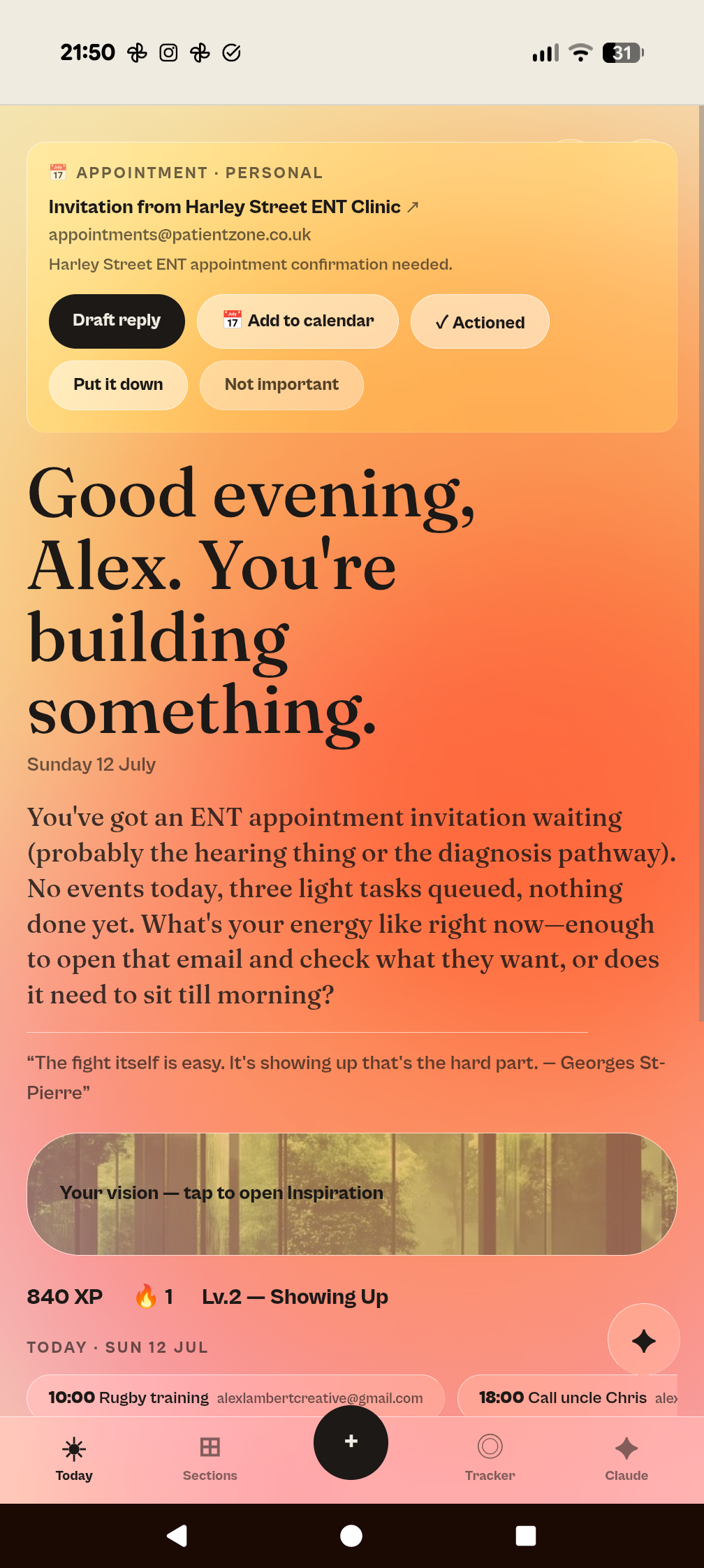
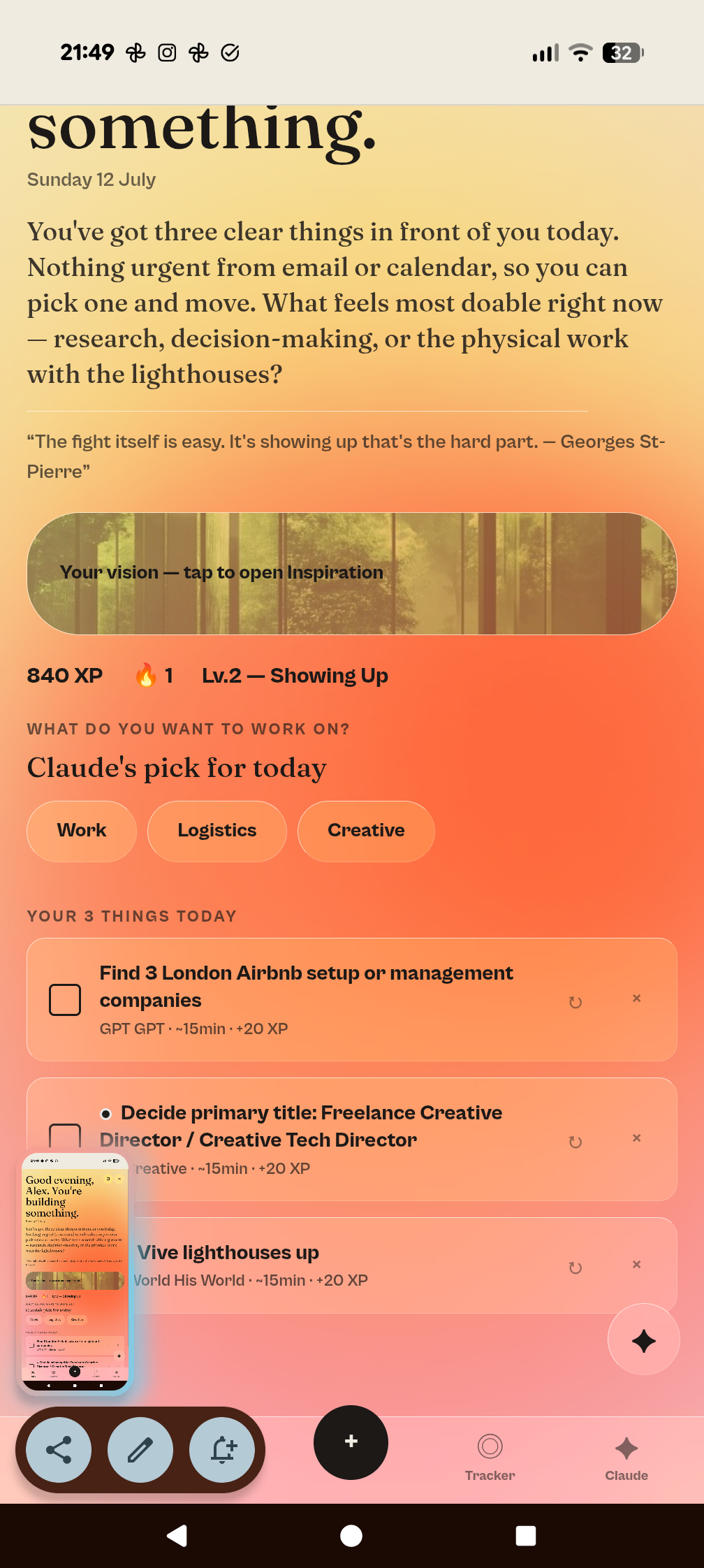
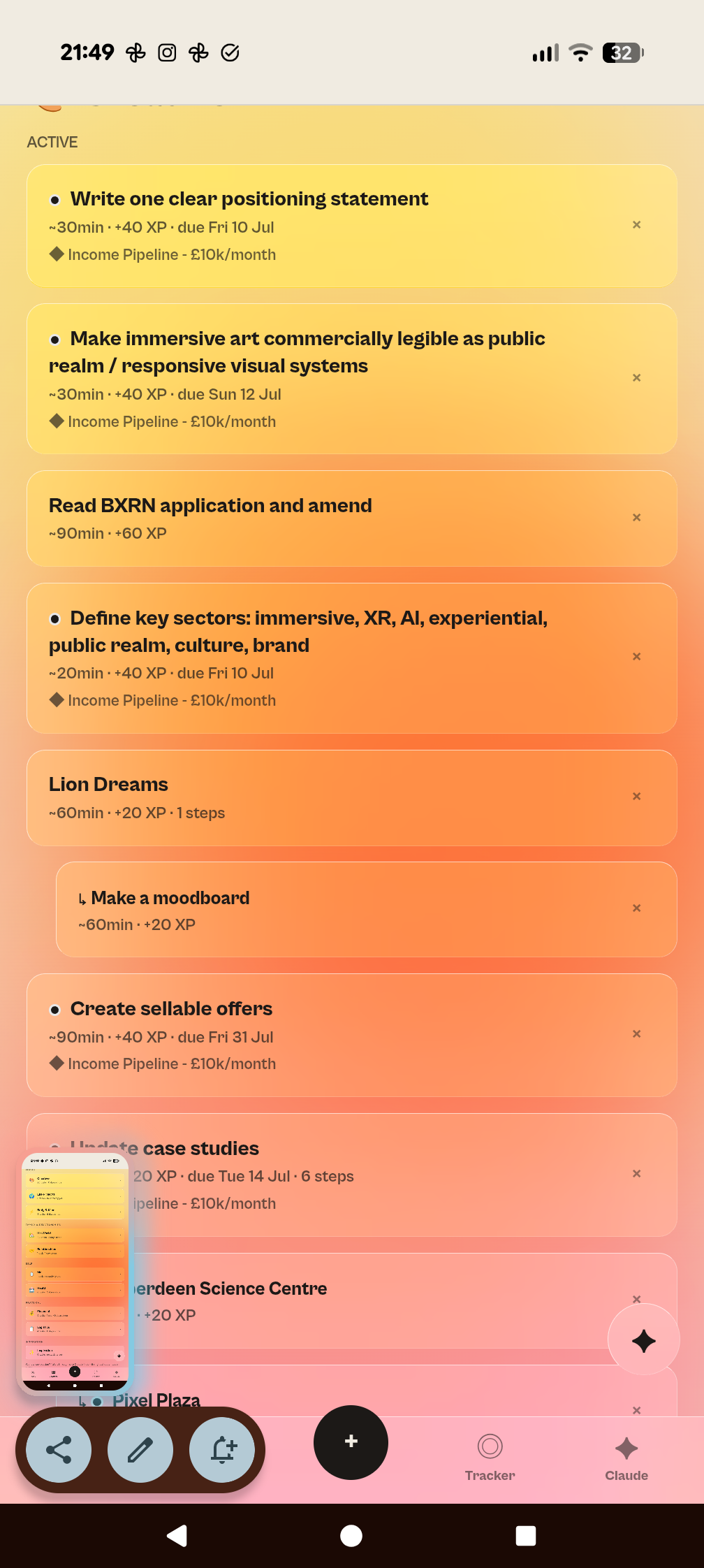
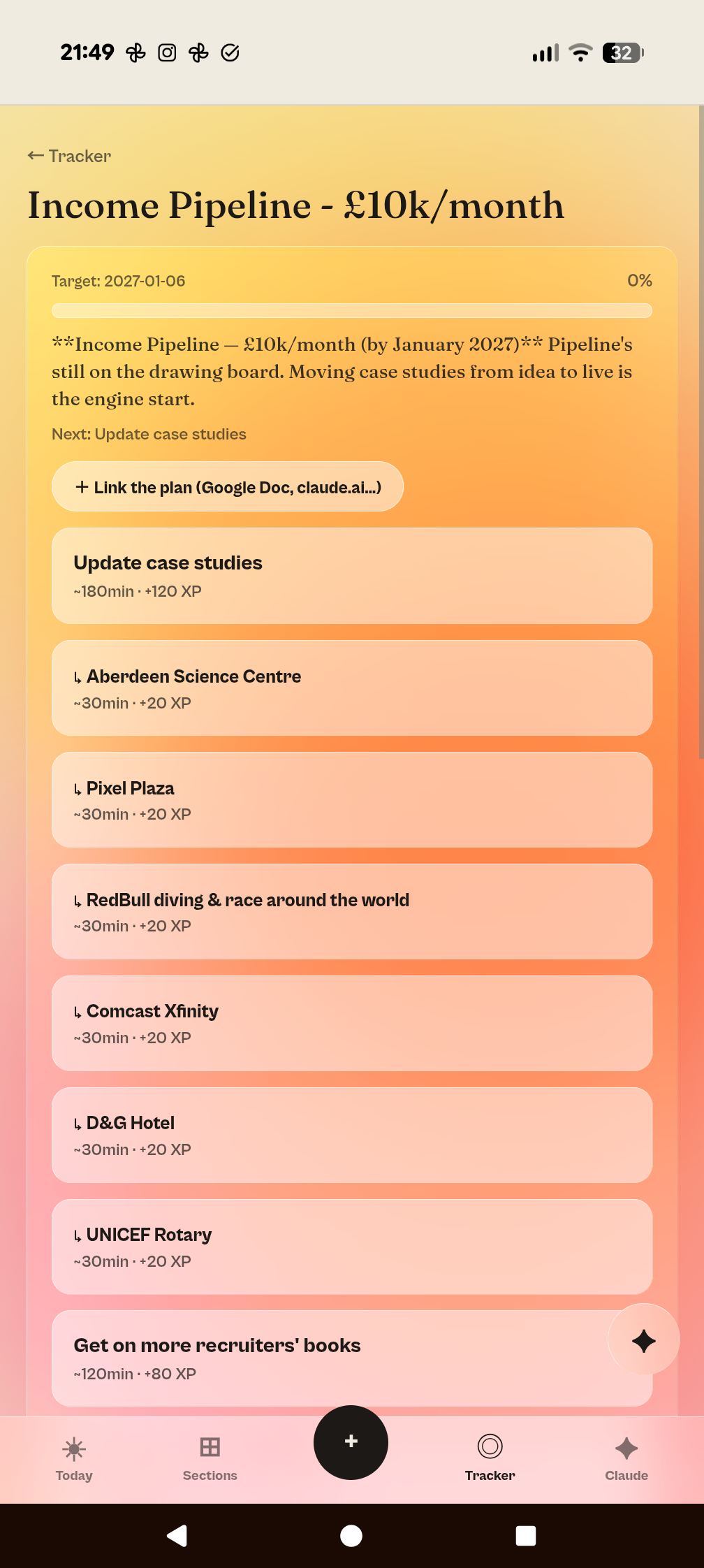
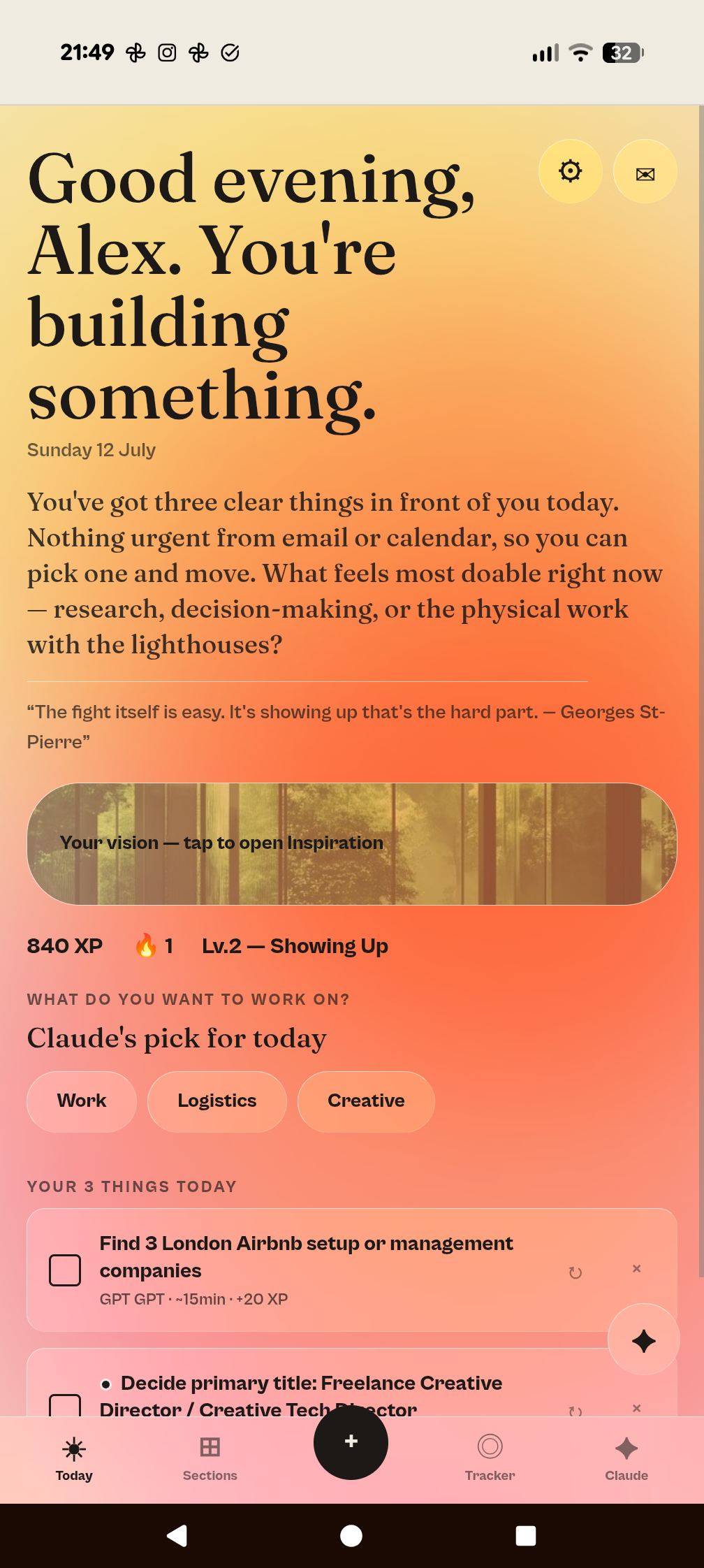
The main decision was simple. The AI picks, I trigger. A deterministic engine scores every open task against deadline, goal, urgency, quick-win, neglect and staleness. It reads my calendar to work out how much focus time I actually have that day. Then Claude curates the shortlist down to three tasks, each with a one-line reason. Removing the decision is the accessibility feature.
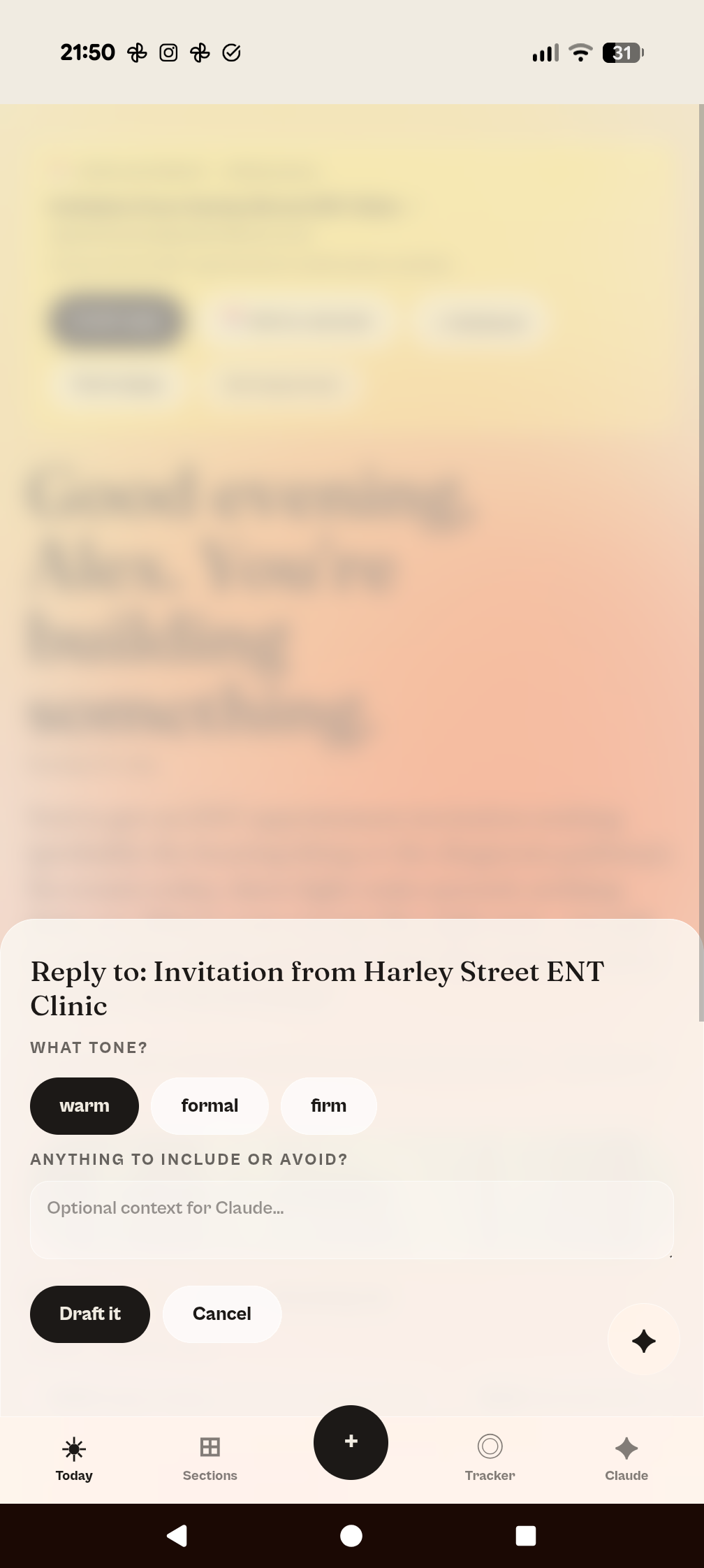
The same principle runs through the rest of it. Chat can save tasks, create calendar events, set goals and file things into life sections. Email triage works across four Gmail accounts. Human priorities sit above the AI, so emails from my co-parent always surface first. Appointment emails get a one-tap "Add to calendar". Draft replies show the reasoning before I send them.
I also built in the ADHD tax. Time estimates get padded by 50%. Partial failures keep the win. If a task completes but the XP write fails, the task stays done and the points reconcile later. My action never gets rolled back because the bookkeeping missed a beat.
The product is live. I use it every day. It runs as an installed app on my phone, with React, Vercel, Supabase, Claude, Google Calendar, Gmail and Drive behind it. Infrastructure costs £0 a month. AI costs single-digit pennies per day.
The value was not in the AI. The value was in knowing what to ask for, knowing what good looked like, testing every claim against the live product, and refusing to accept "done" until I had seen it work on the screen. That is direction, pointed at a new kind of team